
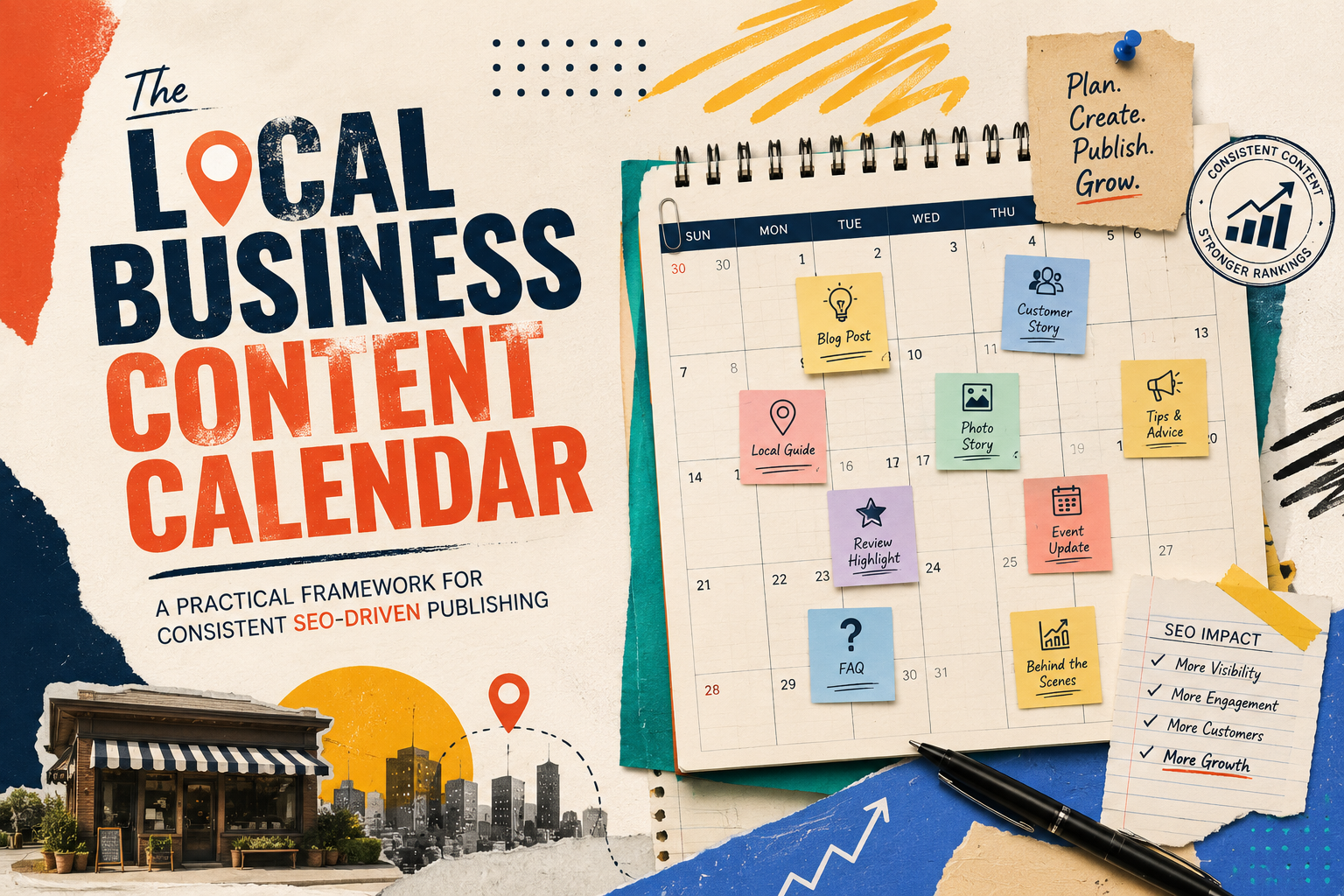
Consistency in content publishing is the difference between businesses that gradually dominate local search and those that plateau. Build a sustainable, SEO-driven content calendar with this practical framework.
The difference between local businesses that steadily build search authority over time and those that produce occasional bursts of content with long gaps in between is almost always the same thing: a content calendar. A structured, realistic, SEO-informed content calendar transforms content marketing from a sporadic initiative into a systematic business growth process.
The starting point for any local business content calendar is an honest assessment of capacity. How many hours per week can realistically be dedicated to content creation whether by the business owner, a staff member, or a hired writer? A sustainable content calendar is built around what you can actually maintain, not what would theoretically be ideal. One high-quality post per month, published consistently, outperforms ambitious plans that collapse after three weeks.
With capacity established, map your content to three strategic pillars: service-specific content (optimized pages and posts targeting your primary service keywords), educational and informational content (answering the questions your customers ask before they’re ready to buy), and locally relevant content (news, trends, guides, and community content that reinforces your geographic relevance and community connection).
For a business publishing weekly, a typical content calendar rotation might look like: Week 1 service-specific blog post targeting a high-intent keyword; Week 2 FAQ or how-to article addressing an informational query; Week 3 local guide or community-relevant content piece; Week 4 customer success story or case study (with permission). This rotation ensures consistent coverage of all three strategic content pillars.
Seasonal planning is an important calendar dimension for most local businesses. Identify the queries that peak in your category during different times of year and create content that will be indexed and ranking before those seasonal peaks arrive. HVAC companies should publish summer cooling and winter heating content months before demand peaks. Tax professionals should publish end-of-year planning content in October and November.
Regular content updates revisiting and refreshing older posts with new information, updated statistics, and additional FAQ content extend the value of your existing content library and send freshness signals to search engines. Block time quarterly to update your top-performing posts.
Frequently Asked Questions
Q: Should a small business outsource content creation or keep it in-house?
A: Both approaches can work effectively, but each has trade-offs. In-house content carries authentic expertise and personality but requires consistent time investment. Outsourced content can maintain publishing frequency but needs careful oversight to ensure accuracy and genuine expertise. A hybrid approach owner-provided outlines and key insights, writer-executed drafts often delivers the best balance of quality, authenticity, and consistency.
Q: How long should local business blog posts be for maximum SEO impact?
A: For competitive local keywords, aim for 800 to 1500 words of genuinely useful, well-organized content. For FAQ-style content targeting featured snippets, 400 to 600 words with clear question-answer structure tends to perform best. Prioritize depth and genuine usefulness over hitting a specific word count.
Q: How do I measure whether my content calendar is delivering SEO results?
A: Track organic traffic to individual blog posts in Google Analytics, monitor keyword ranking changes in Google Search Console, and measure conversions (contact form submissions, calls) attributed to organic search traffic. Look for month-over-month trends over a 3 to 6 month horizon content marketing ROI is cumulative, not immediate.